Can dogs eat apples? Yes, with two easy rules
Apples are a crunchy, low-calorie treat most dogs love — as long as you skip the core and seeds and keep it to a snack. Here's how to serve them safely.
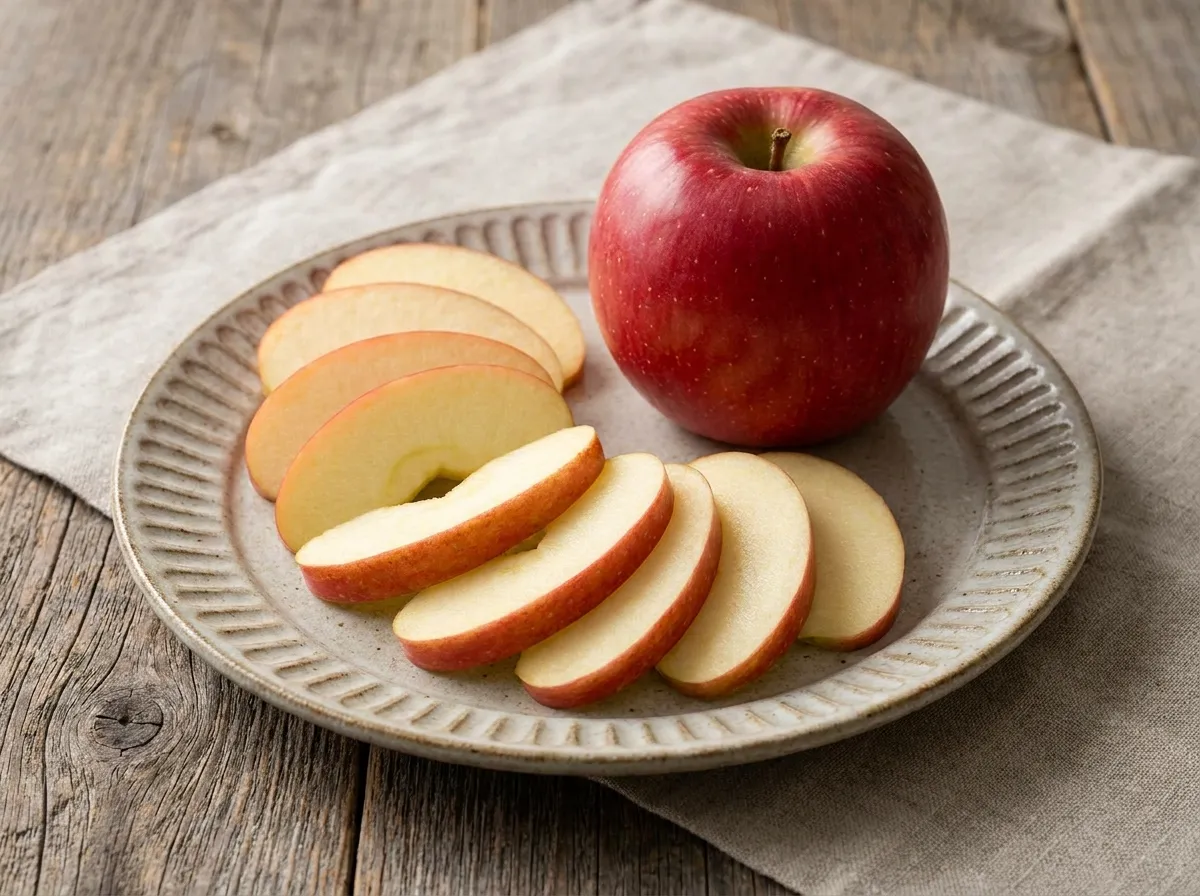
Yes — dogs can eat apples, and they make one of the better everyday treats: crunchy, low in calories, and something most dogs are happy to munch on. Two simple rules keep them safe — take out the core and seeds, and keep apple to a treat rather than a meal.
A slice of apple brings a little fiber and vitamin C for very few calories, and the crunch is satisfying. Your dog doesn't need fruit in their diet — a complete food already covers the nutrition — but as a snack, apple is a low-risk, refreshing choice.

Always remove the core and seeds. Apple seeds contain a compound that can release small amounts of cyanide, so while one accidentally-swallowed seed is unlikely to cause harm, it's best to core the apple and skip the pips. The flesh and skin are the parts to share.
How much apple can a dog have?
Like any treat, apple should stay within about 10% of your dog's daily calories — a few slices for a big dog, one or two for a small one. Too much can bring on a soft stool thanks to the fiber and natural sugar. Skip sweetened apple products like apple sauce or apple-flavored snacks, and always check anything processed for xylitol, a sweetener that is toxic to dogs.
Core it, slice it, keep it a snack — that's really all there is to sharing an apple.
Fresh slices are the simplest way to serve them, and a few frozen pieces make a nice crunchy treat on a warm day. If your dog is diabetic or on a special diet, check with your vet before adding any new food. Informational only — always consult your vet for dietary decisions.
Common questions
Sources
Guidance on this page is grounded in established veterinary-nutrition and animal-health authorities.
Informational only — not a substitute for veterinary advice. Recipes here are vet-informed and use no ingredients known to be toxic to dogs, but every dog is different. Consult your vet before changing your dog's diet.