How many times a day should you feed a dog?
Once a day, twice, or free access all day? Here's what tends to work for adult dogs, why twice is the usual answer, and where puppies and big breeds differ.
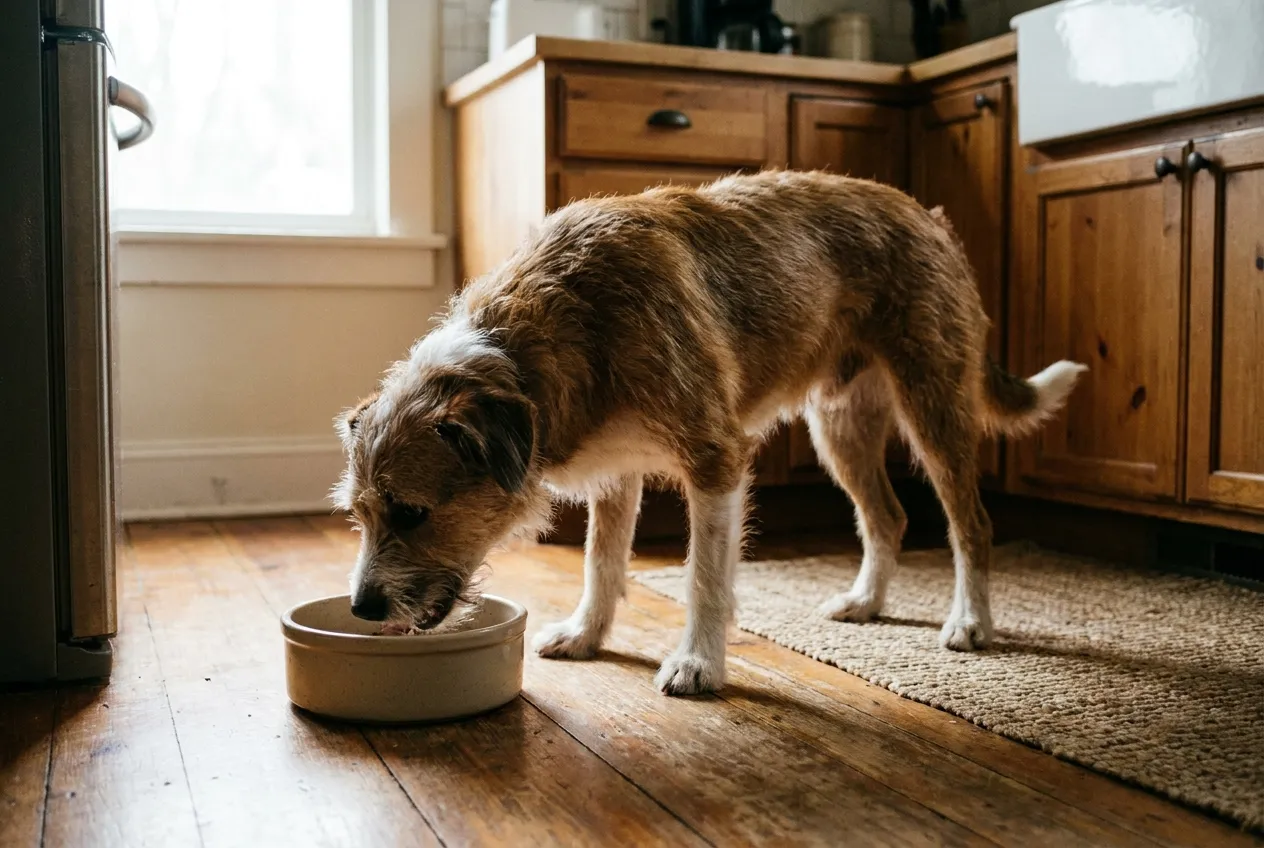
For most adult dogs, twice a day — morning and evening — is the sweet spot. Splitting the daily food into two meals keeps energy and blood sugar steadier, spaces things out comfortably, and tends to mean a calmer, less food-obsessed dog than one long wait between single meals.
That said, some healthy adults do perfectly well on one meal a day, and it's really the total daily amount that matters most, not the exact number of sittings. What counts is that it's consistent and portioned for your dog.
Puppies and big breeds are different
Puppies need feeding more often — up to four small meals a day when they're very young, easing down as they grow. Large and deep-chested breeds are often fed smaller, more frequent meals rather than one big one, and it's usually advised to avoid heavy exercise right around mealtimes for them. If those describe your dog, follow your vet's steer.

Whatever schedule you pick, measure the food and keep the times consistent. Regular meals help with house-training, let you spot a dropped appetite early, and make it much easier to keep portions right for your dog's size and activity.
What about leaving food down all day?
Free-feeding — leaving a full bowl out — makes it hard to see how much your dog eats and easy for weight to creep up, and it doesn't suit multi-dog homes. Scheduled meals give you far more control, which is a big part of keeping a dog at a healthy weight.
Twice a day suits most dogs — but consistency and the right total amount matter more than the exact count.
Pick a routine that fits your day, keep it steady, and adjust portions rather than meal counts as your dog's needs change. Informational only — always consult your vet for dietary decisions.
Common questions
Sources
Guidance on this page is grounded in established veterinary-nutrition and animal-health authorities.
Informational only — not a substitute for veterinary advice. Recipes here are vet-informed and use no ingredients known to be toxic to dogs, but every dog is different. Consult your vet before changing your dog's diet.