How much should you actually feed your dog?
Portion sizes aren’t one-size-fits-all. Here’s how to read the bag, adjust for your dog, and check you got it right.
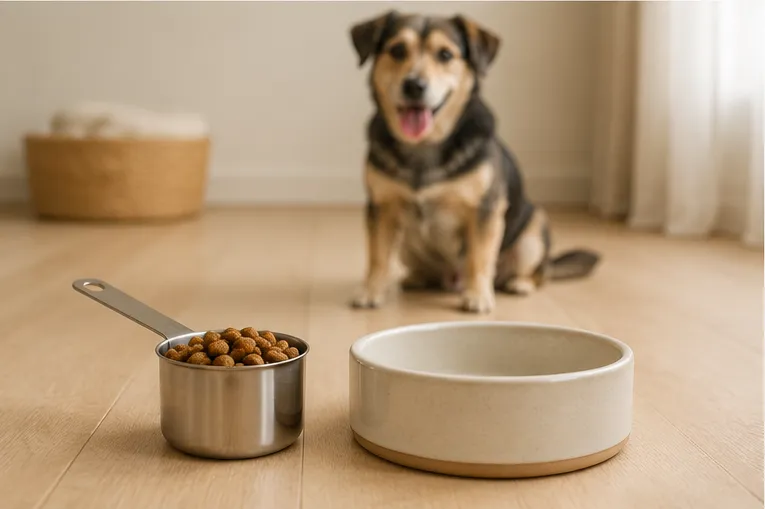
The feeding chart on the back of the bag is a starting point, not a prescription. It’s built for an “average” dog at a healthy weight — and almost no dog is exactly average. Two dogs of the same weight can need portions 30% apart depending on age, activity and metabolism.
Start with the bag, then adjust
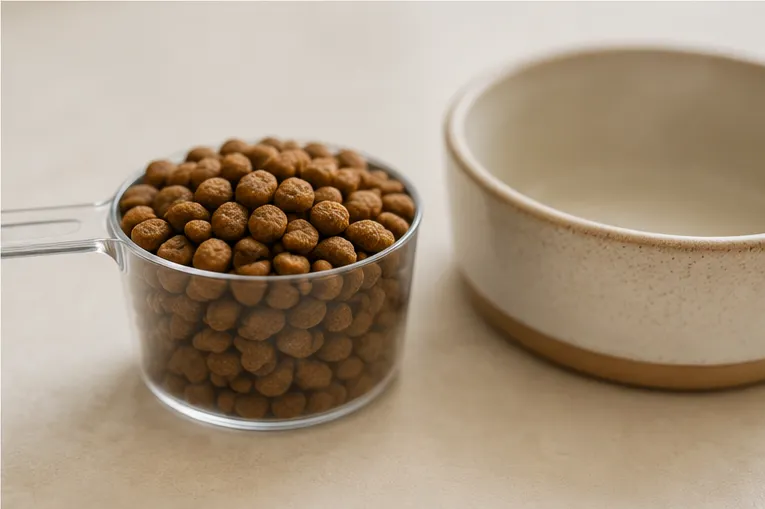
Find your dog’s ideal weight — not necessarily their current weight — on the chart and use that row. Split the daily amount across the number of meals you feed, usually two. That’s your baseline for the next two weeks.
Then watch what actually happens. Weight creeping up? Trim 10%. Ribs getting too easy to count, or energy flagging? Add 10%. Small changes, two weeks at a time.
Treats count. If treats are more than about 10% of the day’s calories, take it out of the bowl — otherwise the math quietly stops adding up.
The body check that actually works
You shouldn’t need a scale to know if you’re close. Run your hands over your dog’s ribs: you want to feel them easily under a thin layer, like the back of your hand. Look from above for a visible waist behind the ribs, and from the side for a tuck-up toward the belly. No waist and hard-to-find ribs means it’s time to trim.
Feed the dog in front of you — not the number on the chart.
Puppies, pregnant dogs, working dogs and seniors all bend these rules. When in doubt, your vet can give you a target weight and a calorie number tailored to your dog — and that’s the figure worth feeding to.
Common questions
Sources
Guidance on this page is grounded in established veterinary-nutrition and animal-health authorities.
Informational only — not a substitute for veterinary advice. Recipes here are vet-informed and use no ingredients known to be toxic to dogs, but every dog is different. Consult your vet before changing your dog's diet.