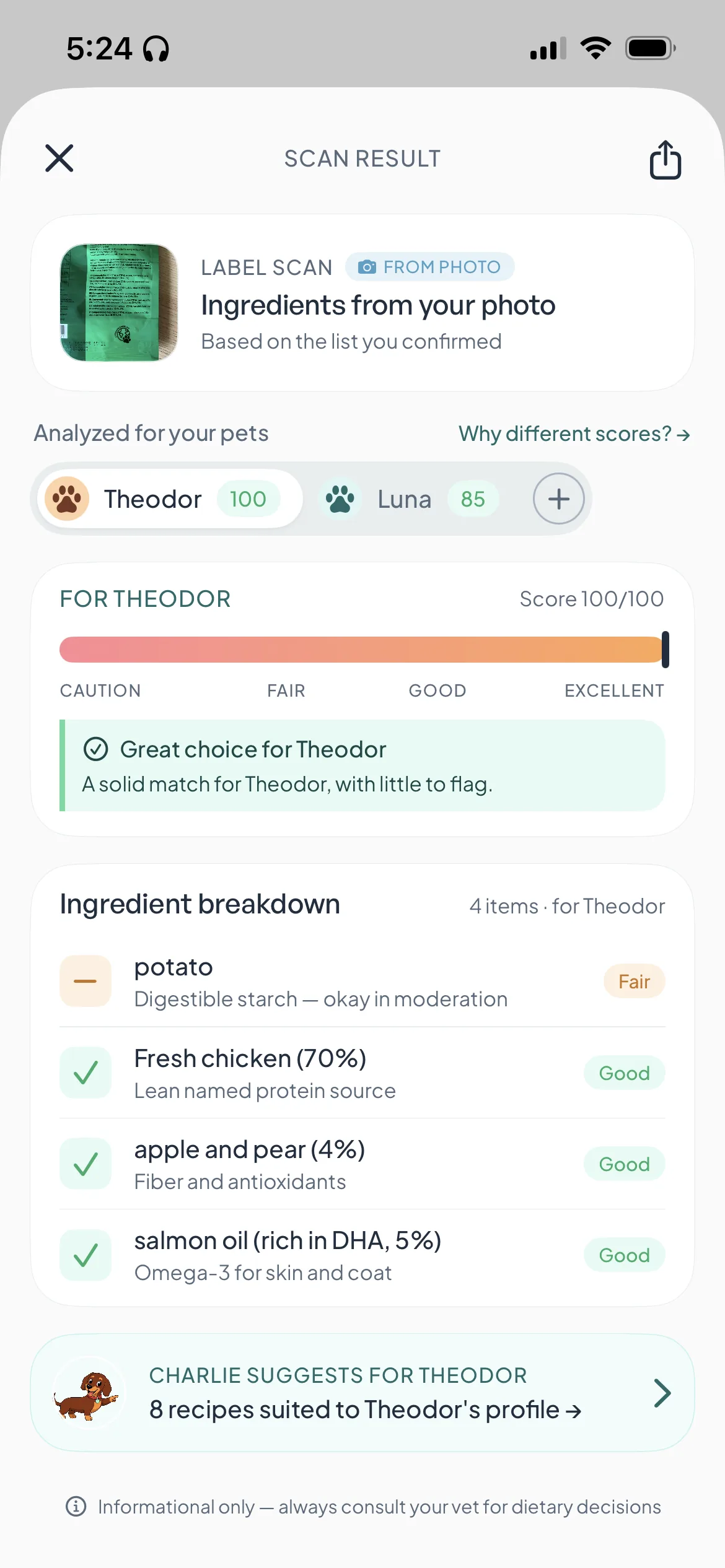
What does grain-free dog food actually mean?
Grain-free has become a marketing badge, but it isn't automatically healthier — and there's a heart-health question worth knowing about. Here's the plain version.
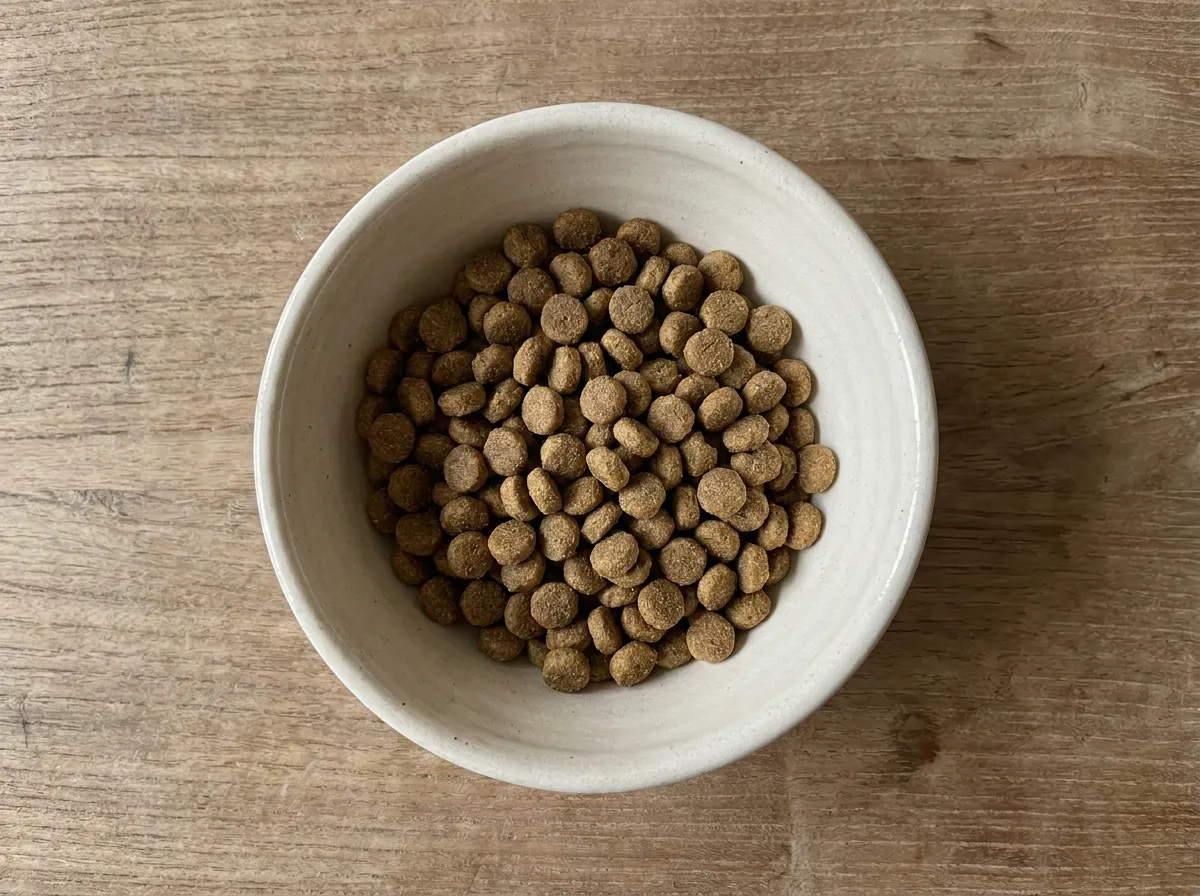
Grain-free simply means a dog food made without grains like wheat, corn or rice, with the carbohydrate coming from something else — often peas, lentils or potatoes instead. It's marketed as more natural or premium, but grain-free doesn't automatically mean healthier, and for most dogs there's no particular reason to seek it out.
A lot of its appeal rests on a myth: that grains are a common allergy trigger. In fact, true grain allergies in dogs are rare. When a dog does have a food allergy, the culprit is almost always a protein like beef, chicken or dairy — not grain. So going grain-free to fix itching usually misses the actual cause.

There's also a heart-health question worth knowing about. Vets and the FDA have investigated a possible link between some grain-free diets (particularly those high in peas, lentils and legumes) and a serious heart condition called DCM. The picture isn't fully settled, but it's a reason not to assume grain-free is the safer choice.
So should you feed grain-free?
Unless your vet has specifically advised it — for a diagnosed grain sensitivity, which is uncommon — there's usually no need. What matters far more than grain-free versus grain-inclusive is that the food is complete and balanced for your dog's life stage, from a maker that invests in nutrition and testing. If you're drawn to grain-free, it's a good thing to talk through with your vet.
Grain-free isn't automatically healthier — complete and balanced matters far more than the grain.
If your dog is currently on a grain-free food and doing well, don't panic — but it's a worthwhile thing to raise at your next vet visit. Informational only — always consult your vet about your dog's diet.
Common questions
Sources
Guidance on this page is grounded in established veterinary-nutrition and animal-health authorities.
Informational only — not a substitute for veterinary advice. Recipes here are vet-informed and use no ingredients known to be toxic to dogs, but every dog is different. Consult your vet before changing your dog's diet.