How to read a dog food label (without the hype)
The front of the bag is marketing; the real information is on the back. Here's how to read a dog food label and spot what actually matters.
The front of a dog food bag is designed to sell; the useful information is on the back and sides. Once you know where to look, you can size up a food in about a minute — and see past the buzzwords.
Start with the one line that matters most
Find the nutritional adequacy statement — in the US, this is the line that says the food is complete and balanced to the AAFCO standard, and for which life stage (growth, adult maintenance, or all life stages). If a product only claims to be for supplemental or intermittent feeding, it isn't built to be your dog's whole diet. This single line tells you more than any front-of-bag claim.
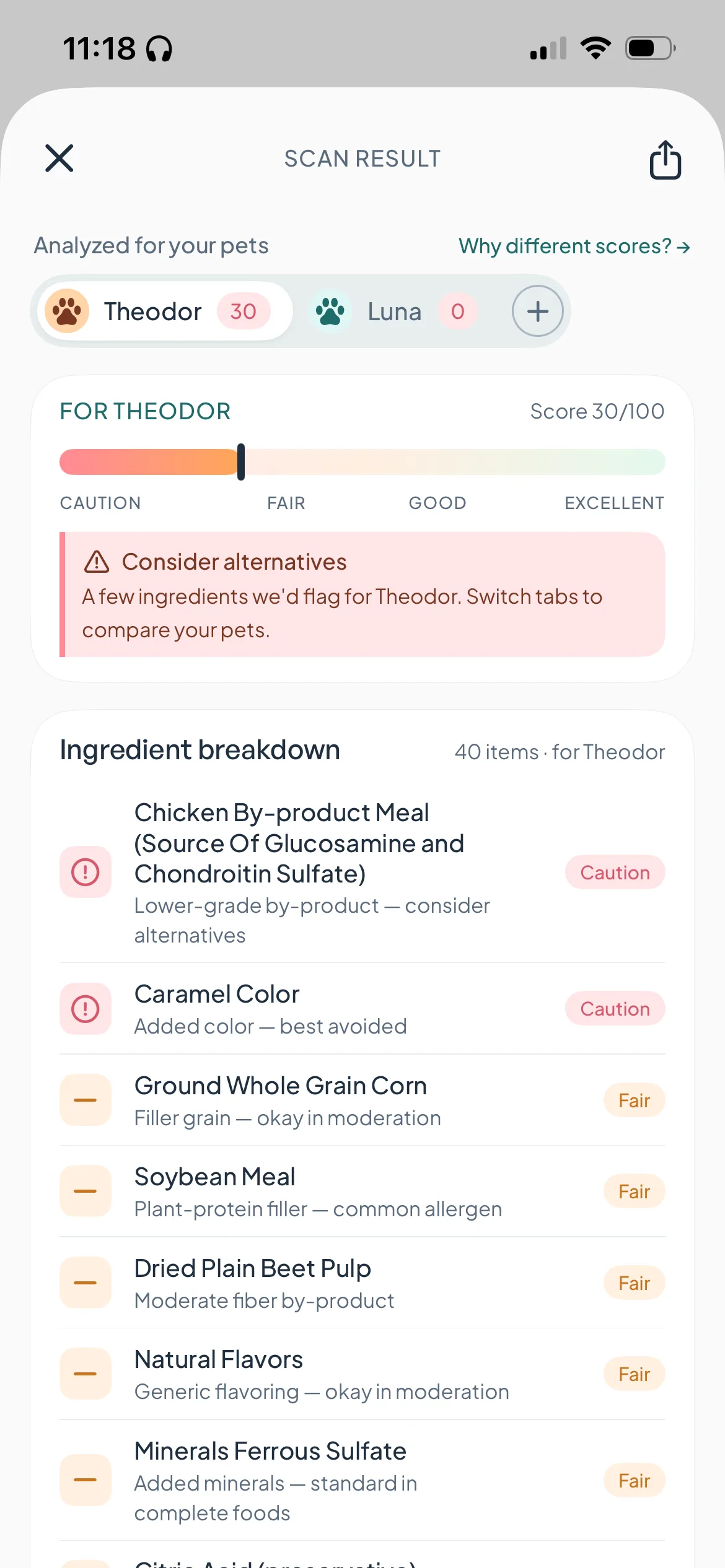
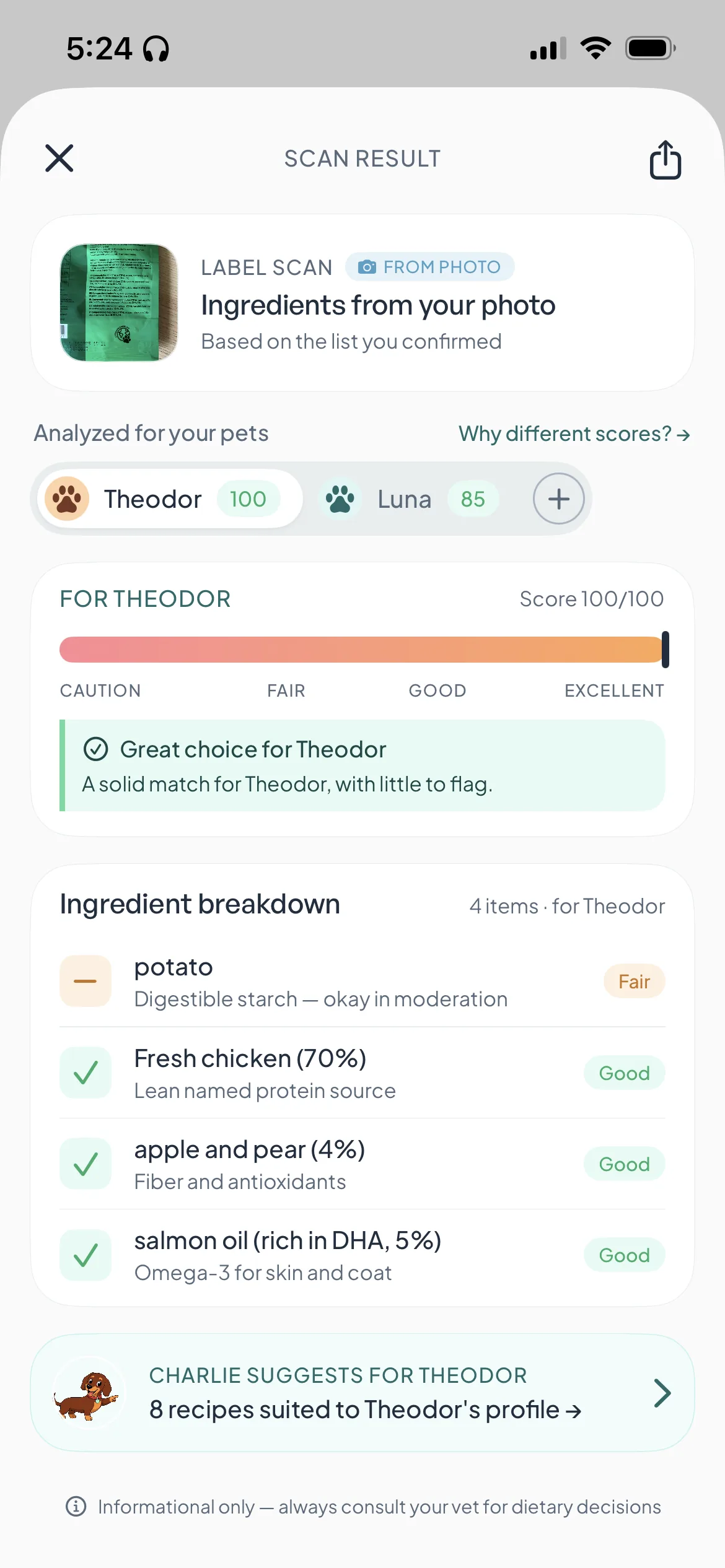
Next, the ingredient list. Ingredients are listed by weight, so the first few matter most. A clearly named protein near the top is a good sign. Don't be scared off by "meal" (a concentrated protein source) or "by-products" (often nutritious organ meats) — they aren't automatically bad, and a named version is better than a vague one.

Watch for ingredient splitting. If several forms of the same grain or starch are listed separately, they can each sit lower down while together adding up to a lot. Read the whole list, not just the first line.
The guaranteed analysis and the fluff
The guaranteed analysis gives minimum protein and fat and maximum fiber and moisture — handy for rough comparisons, though remember wet and dry foods look very different because of water content. And treat words like "premium", "holistic" and "human-grade" with caution: some are unregulated marketing, so let the adequacy statement and ingredients do the talking.
Front of the bag sells; back of the bag informs — start with the complete-and-balanced line.
No single food is right for every dog, so use the label to shortlist, then match it to your dog's age, size and any health needs — and ask your vet if you're unsure. Informational only — always consult your vet for dietary decisions.
Common questions
Sources
Guidance on this page is grounded in established veterinary-nutrition and animal-health authorities.
Informational only — not a substitute for veterinary advice. Recipes here are vet-informed and use no ingredients known to be toxic to dogs, but every dog is different. Consult your vet before changing your dog's diet.