Wet vs dry dog food: which is better?
Both wet and dry food can be complete and balanced — the right pick comes down to your dog, your budget and their teeth. Here's how the two compare.
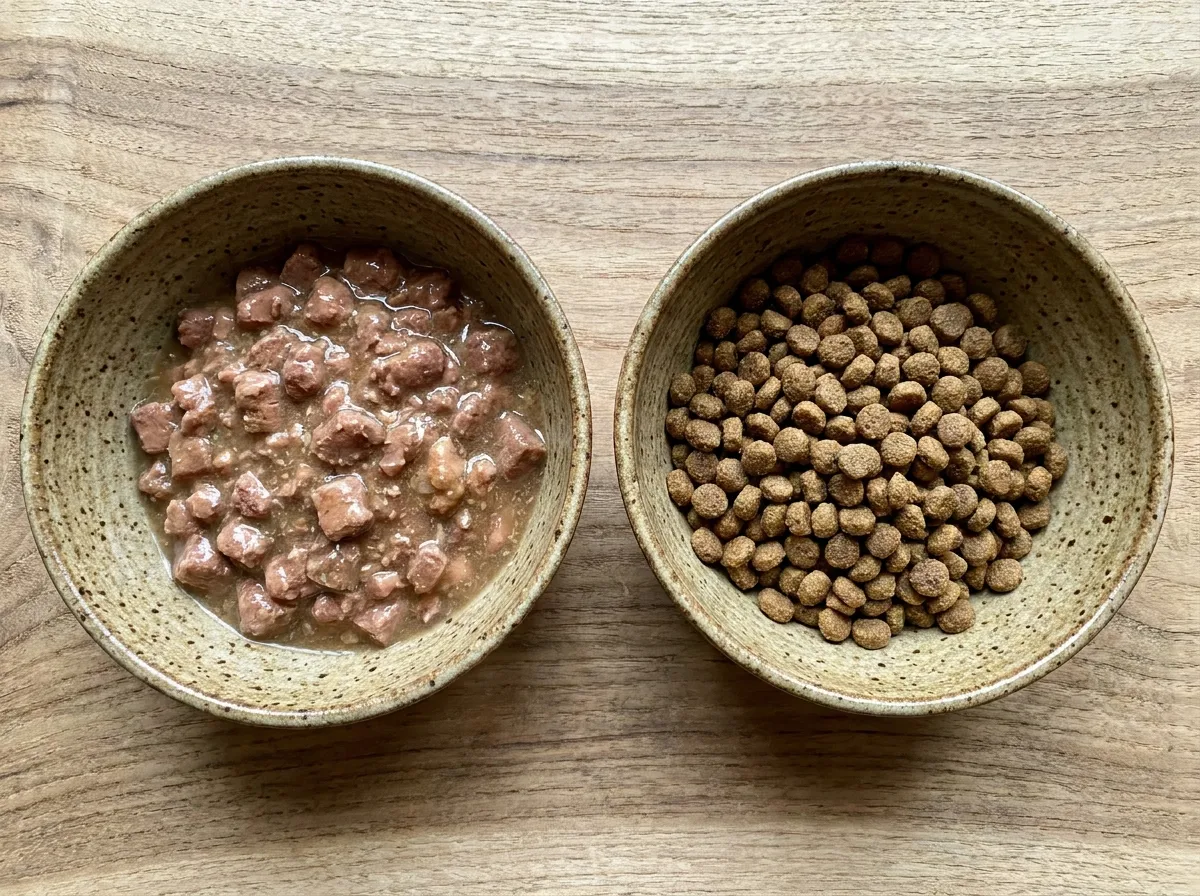
It's one of the most common questions new dog owners ask, and the honest answer is that neither wins outright. Both wet and dry food can be complete and balanced — meaning either can be your dog's whole diet — so the choice comes down to your particular dog, your budget, and a few practical trade-offs. Plenty of owners land on a mix of the two.
What dry food does well
Dry food (kibble) is convenient, keeps well once opened, and tends to cost less per meal. It's easy to measure and works nicely in puzzle feeders and slow bowls. It's also calorie-dense, so portions look small — which makes accurate measuring important. The old idea that kibble cleans teeth is overstated; ordinary kibble does little for dental health on its own.
What wet food does well
Wet food is high in moisture, which helps with hydration and suits dogs who don't drink much, along with many seniors and dogs with dental issues who find it easier to eat. It's usually more palatable, so it can tempt a fussy eater or a recovering dog. The downsides are cost, a shorter fridge life once opened, and more mess.

Whichever you choose, look for the line that says the food is complete and balanced to the AAFCO standard for your dog's life stage. That single statement matters far more than the wet-versus-dry question. Mixing wet and dry is completely fine, too — just count both toward the daily total so you don't overfeed.
Neither wins outright — pick for your dog's needs, your budget, and how they like to eat.
If your dog has a specific health need — kidney or dental issues, weight to lose, a poor appetite — your vet can steer you toward the format that helps most. Informational only — always consult your vet for dietary decisions.
Common questions
Sources
Guidance on this page is grounded in established veterinary-nutrition and animal-health authorities.
Informational only — not a substitute for veterinary advice. Recipes here are vet-informed and use no ingredients known to be toxic to dogs, but every dog is different. Consult your vet before changing your dog's diet.