Feeding a dog with a sensitive stomach
If your dog is often gassy, gurgly or prone to loose stool, small feeding changes can help — but the first step is ruling out anything that needs a vet.

A "sensitive stomach" isn't a diagnosis so much as a pattern owners recognize: frequent gas, a gurgly tummy, the odd bout of loose stool, or a dog who seems put off their food. Feeding changes can genuinely help — but they come after, not instead of, a conversation with your vet.
That order matters, because the same signs can point to something a diet won't fix on its own — a food intolerance, parasites, or another health issue. So the honest first step is to have your vet rule those out. Once they have, the feeding side is where you can make things more comfortable.
What tends to help
Dogs with touchy digestion are often fed a highly digestible, simpler diet: fewer ingredients, a single, named protein, and moderate rather than high fat, since fat is harder on some stomachs. Consistency helps too — steady meals at steady times, gradual changes, and not too many extra treats or table scraps muddying the picture.

When you do change anything, change one thing at a time and go slowly. Swapping food overnight is one of the most common triggers of the very upset you're trying to avoid.
Reading the label
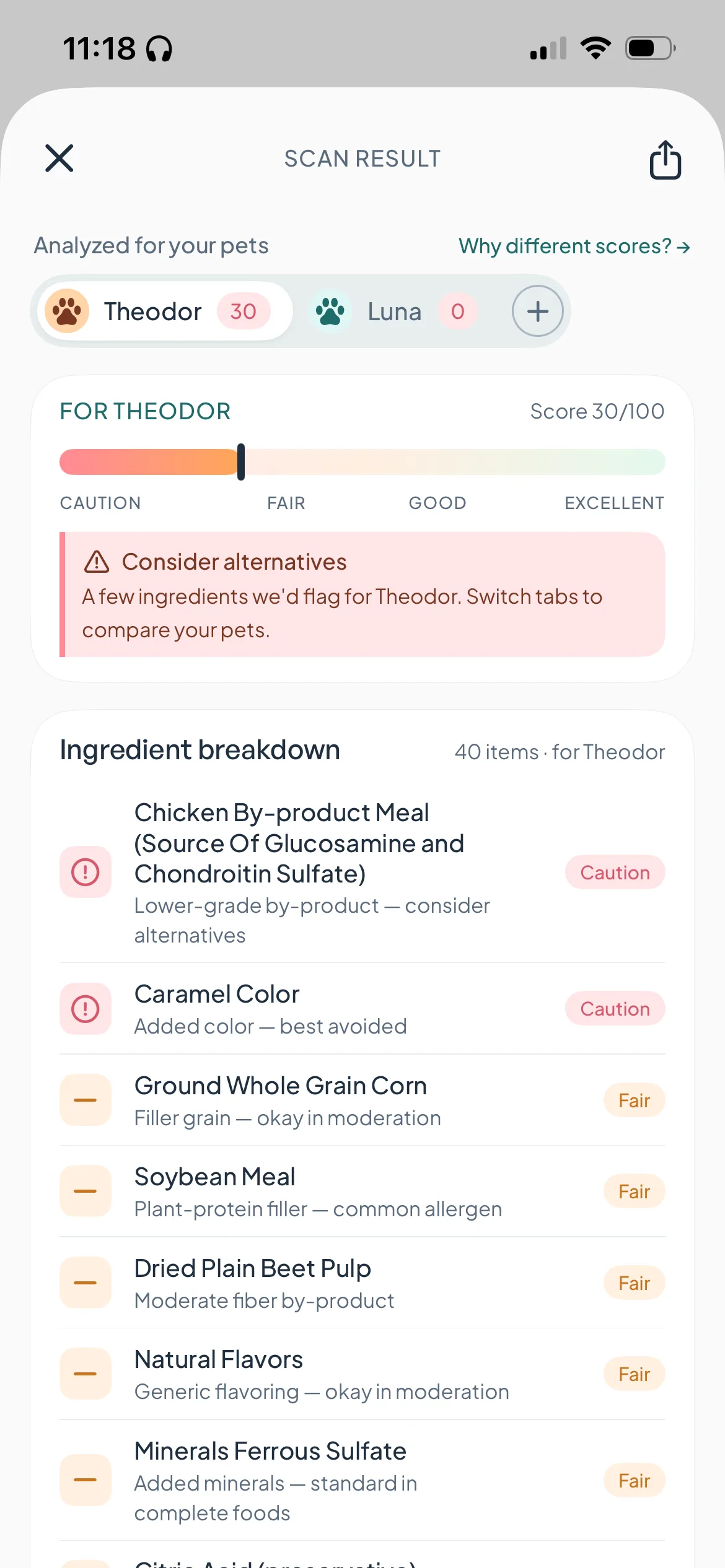
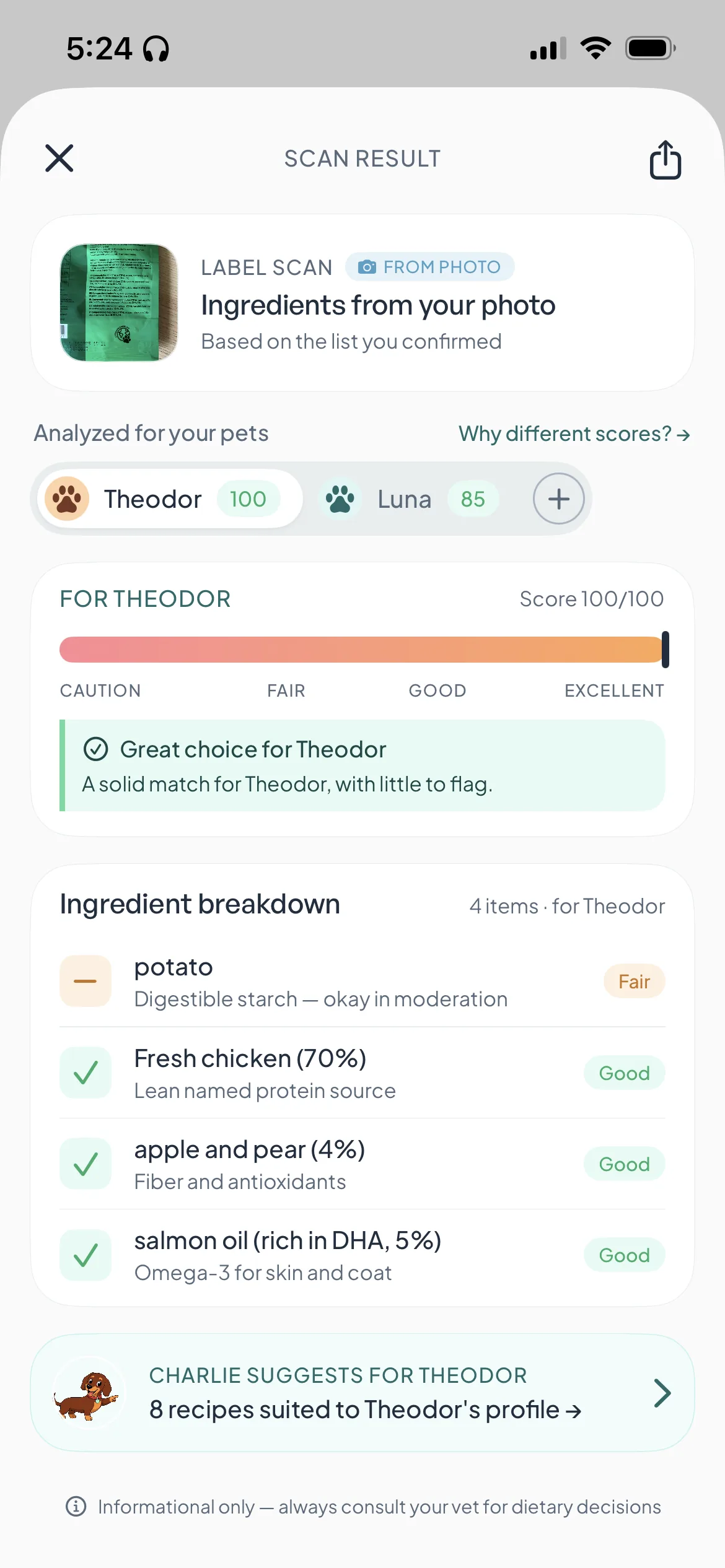
You don't need a perfect food, just a suitable one. Look for a clearly named protein you can point to, a short and readable ingredient list, and a formula that meets the complete-and-balanced standard for your dog's life stage. "Sensitive stomach" on the front of a bag is marketing, not a guarantee — the ingredient list tells you more than the claim does.
Rule out the medical first, then let simple, steady feeding do the quiet work.
If the upset is ongoing, severe, or comes with weight loss, low energy or blood in the stool, that's a vet visit — and for stubborn cases, your vet may refer you to a veterinary nutritionist who can tailor a diet properly. Informational only — always consult your vet for dietary decisions.
Common questions
Sources
Guidance on this page is grounded in established veterinary-nutrition and animal-health authorities.
Informational only — not a substitute for veterinary advice. Recipes here are vet-informed and use no ingredients known to be toxic to dogs, but every dog is different. Consult your vet before changing your dog's diet.