Homemade dog food: a beginner's guide
Cooking for your dog can be rewarding — but a plate of chicken and rice isn't a complete diet. Here's how to start the right way, and the one step not to skip.

Cooking for your dog can be genuinely rewarding — you control every ingredient, and many owners love knowing exactly what's in the bowl. But there's one thing to understand before you start: a plate of chicken and rice is a nice meal, not a complete diet. Done well, home cooking is great; done casually, it can leave gaps.
What a balanced bowl needs
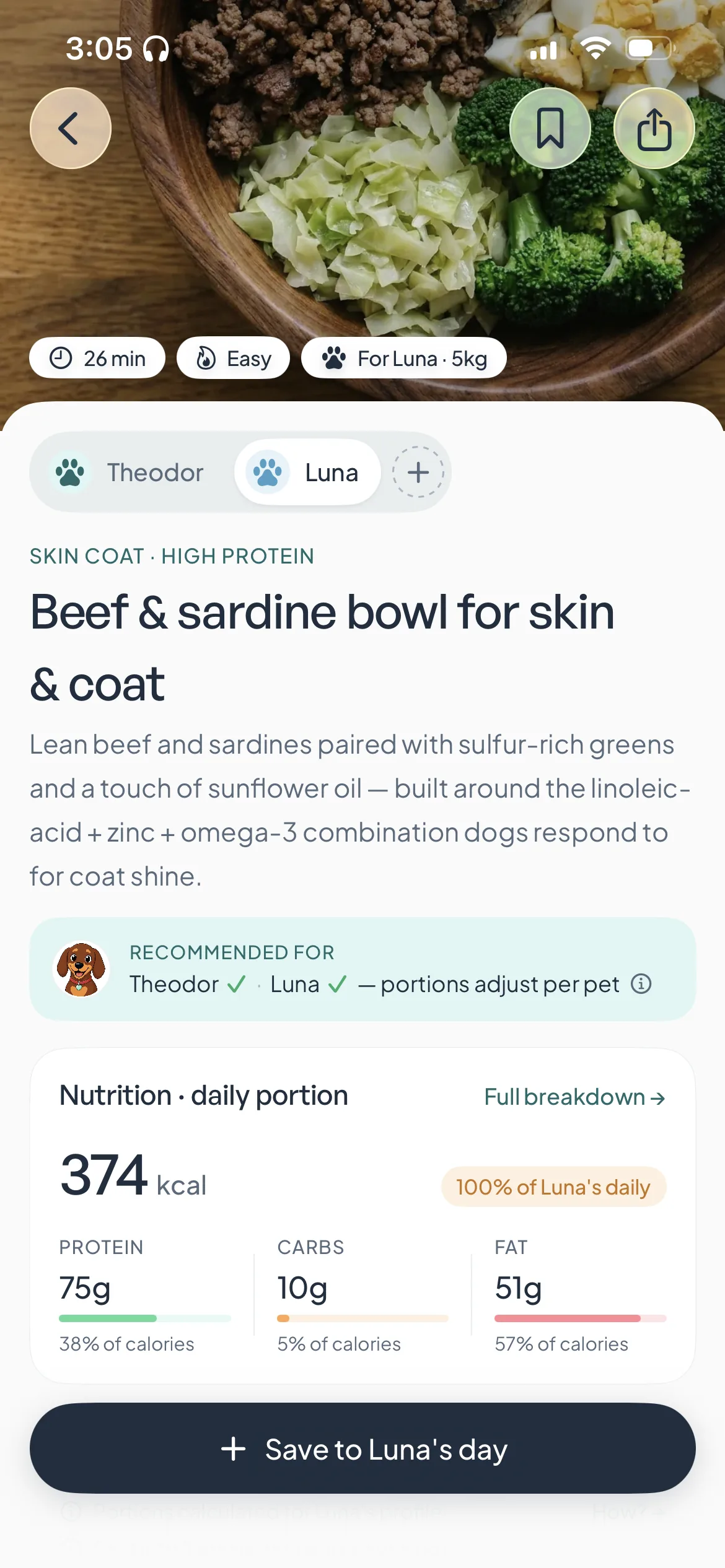
A complete home-cooked diet usually pulls from a few groups: a quality protein (chicken, turkey, beef, fish), a digestible carbohydrate (rice, sweet potato), some vegetables for fiber and micronutrients, a fat and omega-3 source (like fish oil), and — the part people miss — a calcium and vitamin-mineral source to fill what whole foods alone don't cover. Getting those proportions right is what makes it complete.

The one step not to skip: get the recipe balanced by a professional. A vet or a board-certified veterinary nutritionist can formulate (or check) a recipe so it's complete and balanced for your dog. Randomly-sourced internet recipes are often short on calcium or key nutrients over time.
Starting out safely
Cook everything plain — no onion, garlic, salt or heavy oils — and introduce the new food gradually over a week or so, the same way you'd switch any diet. Weigh portions to your dog's size and activity rather than guessing, and keep an eye on their weight and stool as you settle in.
Home cooking is a wonderful thing to do well — the secret is treating balance as the goal, not an afterthought.
A few dogs need extra care before switching — puppies still growing, pregnant dogs, and any dog with a health condition — so those are firmly a vet conversation first. Start with a couple of balanced recipes you enjoy making, and build from there. Informational only — always consult your vet for dietary decisions.
Common questions
Sources
Guidance on this page is grounded in established veterinary-nutrition and animal-health authorities.
Informational only — not a substitute for veterinary advice. Recipes here are vet-informed and use no ingredients known to be toxic to dogs, but every dog is different. Consult your vet before changing your dog's diet.